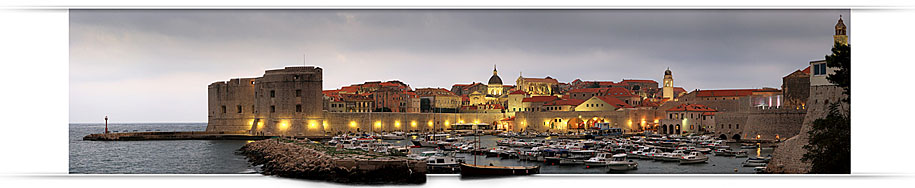
"If you want to see heaven on earth, come to Dubrovnik". George Bernard Shaw, while staying in Dubrovnik in 1929.,
One of the main attractions in southern Dalmatia is the extraordinary city of Dubrovnik. Vast walls, up to 25 m tall, come complete wirh fortresses, towers and the streets are paved with timepolished pale marble. The town is surrounded with rich vegetation, rare islands, white pebble beaches and crystal clean sea and the impression of this region make the vacation an unforgettable experience for every visitor.
Good to know facts:
Climate
Dubrovnik is blessed with an especially kind climate, with mild and wet winters and hot and dry summers. The best period to visit Dubrovnik is probably the period between April to October. High season has numerous advantages for turists seeking fun and excitement, also for those who want to explore the cultural life of Dubrovnik since most cultural events (Dubrovnik Summer Festival) take place during that period. (July-August)
In March spring starts and usually bring some rain but is definetly something to experience with the blossoming trees and nature starting to awake. The autumn months, September and October, are very good for travel if you want to escape the masstourism. Low-season brings lower prices and beches offer more space yet the weather is stable and the sea pleasant warm.
Dubrovnik is located with the possibility to easy reach many of the islands nearby, the islands range from the quiet Elaphites with Kolocep, Lopud and Sipan and the national park, Mljet, to pittoresque island of Korcula and the small but friendly island outside Dubrovnik named Lokrum.
Safety and Travelling with children
It is generelly considered that Dubrovnik and the Dubrovnik Region is a safe environment to travel with kids.
Customs -- What You Can Bring Into Croatia:
Visitors can bring in foreign currency in any amount, but anything above 40,000kn ($7,400) must be declared in writing. One liter of spirits, 2 liters of wine, 2 liters of liqueur and 1 carton of cigarettes can be brought in duty free.
Drugstores
Croatian drugstores are called Ljekarna. They are open from 8am to 7pm weekdays and until 2pm on Saturday. In larger cities, at least one ljekarna stays open 24 hours.
Electricity
Croatian electricity is 220V, 50Hz; the two-prong Continental plug is standard
Emergencies
911 equivalent: tel. 112. Police: tel. 92. Fire: tel. 93. Ambulance: tel. 94. Roadside assistance: tel. 987. (When calling from abroad or by cellphone, call +385-1-987.) General information about international numbers, tel. 902. Weather forecast and road conditions: tel. 060/520-520.
Etiquette & Customs
Croatians, especially Croatian women, take pride in their appearance. In cities, both men and women usually dress in business casual while on the coast and countryside, the "dress code" is more relaxed. You will never see Croatians wearing immodest or sloppy clothes in public places. If you plan to visit museums or churches anywhere, plan to wear tops with sleeves and pants that go to at least the knee.
Gestures
Dobar dan (good day) is the way Croatians generally greet each other. Handshakes are appropriate for first meetings and between business associates. Good friends will kiss on both cheeks in the European style.
Holidays
Croatian shops and banks are closed on public holidays, which are: January 1, New Year; January 6, Epiphany; March or April, Easter Monday; May 1, Labor Day; May, Corpus Christi; June 22, Anti-Fascist Day; June 25, Croatian Statehood; August 5, Thanksgiving; August 15, Assumption; October 8, Independence Day; November 1, All Saints Day; December 25 and 26, Christmas.
Legal Aid
Consult your embassy if you get into legal trouble in Croatia,most of the embassies are located in Zagreb.
Liquor Laws
The minimum age for purchasing liquor is 18, but there is no minimum age for consuming it. Croatia has a zero tolerance law regarding drinking and driving; the legal limit is 0.0% blood alcohol. Package liquor (wine, beer, spirits) can be purchased in markets, wine stores, and some souvenir shops, and at almost every gas station in Croatia
Tipping
A 10% to 15% gratuity is expected in upscale restaurants. Otherwise, it is considered polite to leave any coins from your change on the table in cafes and restaurants. A 10% tip for other service providers (taxi drivers, hotel personnel, and others) is the norm, as is a tip for anyone who helps you carry your luggage or conducts a tour.
Water
Tap water is potable throughout Croatia -- feel free to order tap water at restaurants.
Area Codes
Croatia's country code is +385, for Dubrovnik +385 (0) 20